The privilege of the mic
Written by: Veronica Aguilar
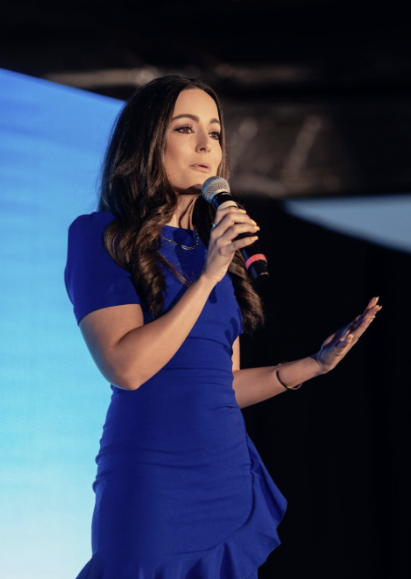
There’s something powerful about holding a microphone. It’s more than just equipment. It’s responsibility, influence, and access. Every time I’m handed one, I remind myself what a privilege it is to have a platform and a voice. Public speaking isn’t just about delivering words. It’s about creating a feeling. I want people to leave inspired, motivated, seen, and empowered.
Whether I’m emceeing an event, moderating a panel, leading a workshop, or giving a keynote, my goal is always the same. I want to create a moment that stays with someone long after the room empties. To me, that’s the real power of speaking.
Start strong and come full circle
I love opening with a hook. A question, a quote, a stat, a theme, or a story that makes the audience lean in right away. Something that sparks curiosity and makes them think, Where is this going?
Then, at the end, I bring it back.
Tying that opening moment into the close gives the speech a sense of completion and intention. I don’t think of speeches as bullet points or sections. I think of them as a flow. When it flows for me, it flows for the audience too.
Know the room but don’t lose yourself
Every audience is different. A graduation speech feels different than a recruitment event. A panel has a different energy than a keynote. It’s important to tailor your message to the room and meet people where they are.
But you can’t lose your voice trying to be everything to everyone.
People don’t connect with perfect speakers. They connect with real ones. Authenticity is what makes someone lean in and trust you. Be prepared, be thoughtful, but always be yourself.


Write to engage, not just inform
When I’m writing a speech, I constantly ask myself what I want people to feel and what I want them to remember. Clarity matters, but connection matters more.
If the setting allows, I love building interaction into my talks by asking questions, pausing, and giving people space to reflect. The best speeches feel less like monologues and more like conversations. When the audience feels involved, they stay present.
Know your space
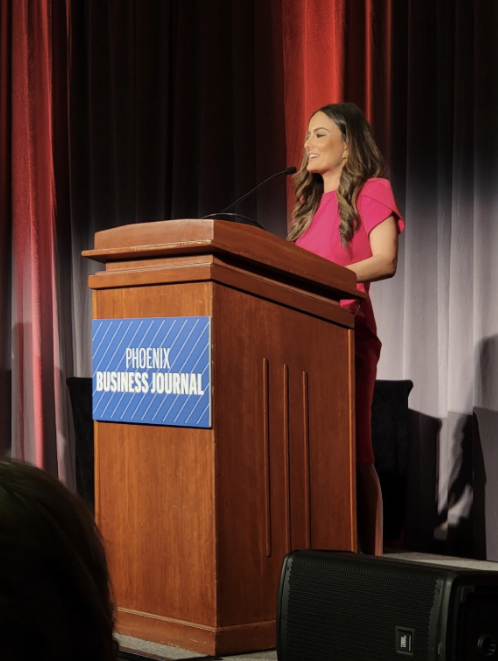
One thing people don’t talk about enough is knowing the physical space you’ll be speaking in. It makes a bigger difference than you think.
Will you have a handheld mic or a headset? Will you be standing at a podium or free to walk around? How many people are in the room? Where will you enter from? Are you using slides with a clicker or is it just you and your voice?
All of those details affect how you move, gesture, and connect.
If it’s a smaller setting, you might sit and make it more intimate. If it’s a big stage, you might use the space and walk with purpose. The more familiar you are with the setup, the calmer you feel. And when you feel calm, you feel confident.
Knowing the space helps you practice smarter and settle your nerves before you even say your first word.
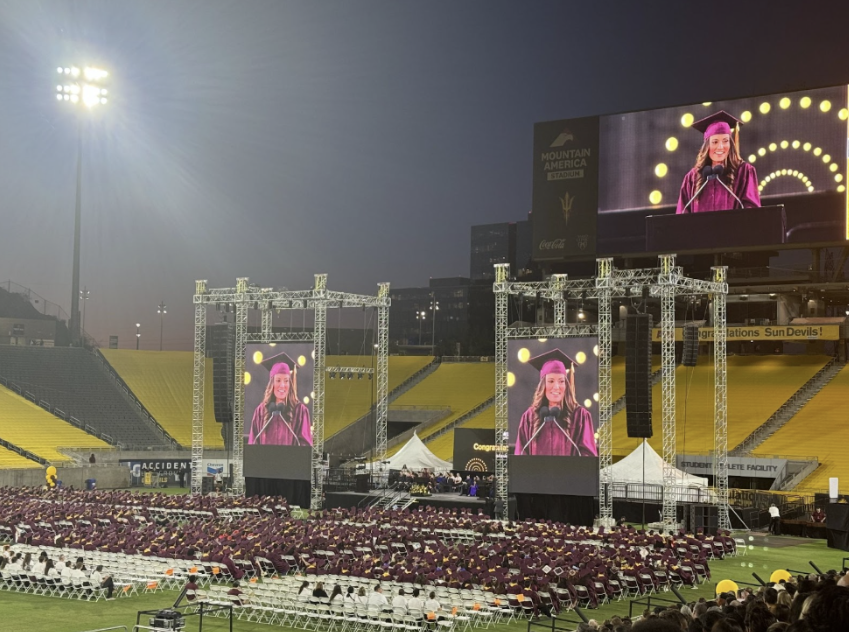
Veronica Aguilar giving a speech to the graduating class at Arizona State University.
Breathe. Seriously.
If there’s one practical tip I swear by, it’s breathing. Your breath controls everything. Your nerves, your pacing, your clarity. Slowing down and breathing deeply helps eliminate filler words and gives your message more weight. Silence can be powerful.
Even after years of speaking, I still get nervous before stepping on stage. That mix of butterflies and excitement never really goes away. But the second the mic hits my hand?
Game on. I’m in the zone.
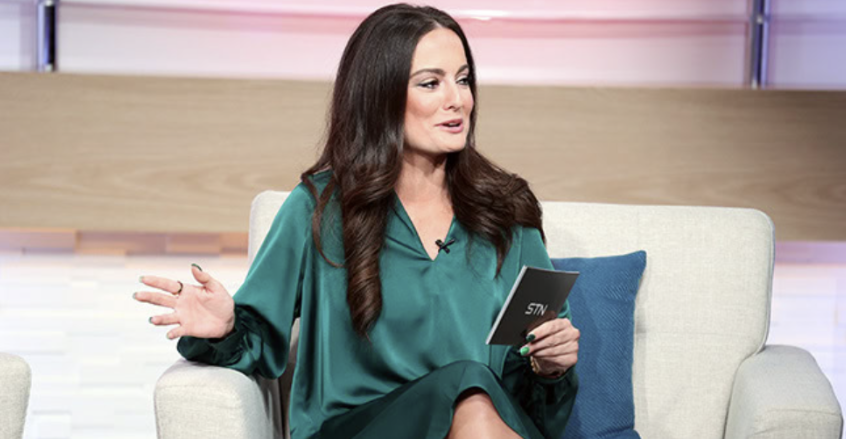
Veronica Aguilar in her role as a show host for the Social Television Network (STN).
Prepare so you can be present
Preparation gives me freedom. I format my speeches so they’re easy to read at a glance by bolding or highlighting key words and transitions so I never lose my place. I memorize the structure and flow rather than every single word, which helps me sound natural.
I record myself on my phone, watch it back, practice in the mirror, and pay attention to pacing and body language. And yes, I talk with my hands (very Italian of me). We all have our “thing.” Notice yours. Refine it. Don’t erase it. Practice doesn’t make you robotic. It makes you confident enough to be fully present.
Learn from the speakers who inspire you
I also think it’s important to study the speakers who move you. For me, that’s people like Brené Brown, Simon Sinek, and Barack Obama.
They each have different styles, but what they share is presence. Their pacing, their pauses, the way they let moments breathe, and the rise and fall of their tone all feel intentional. They don’t rush. They tell stories. They allow silence to land. Watching them reminds me that sometimes the most powerful moments aren’t what you say, but how you say it.
Remember who it’s really about
Even though you’re the one with the mic, the moment isn’t about you. It’s about the audience. Their experience. Their takeaway. Their feeling.
Whether I’m speaking at an award show, a workshop, or sharing a story about watching one of my former students graduate college, I’m always thinking about what they need in that moment. When you focus on serving the room, everything else falls into place.
Close strong and have fun
Just like you hook them at the beginning, you have to close with intention. Bring the story full circle. Leave them with something that lingers. A quote, a memory, a feeling.
And most importantly, have fun.
Energy is contagious. If you’re genuinely present and enjoying yourself, the audience will feel it too.
At the end of the day, public speaking isn’t about perfection. It’s about connection.
Say it like you mean it, trust your voice, and remember what a gift it is to be heard.